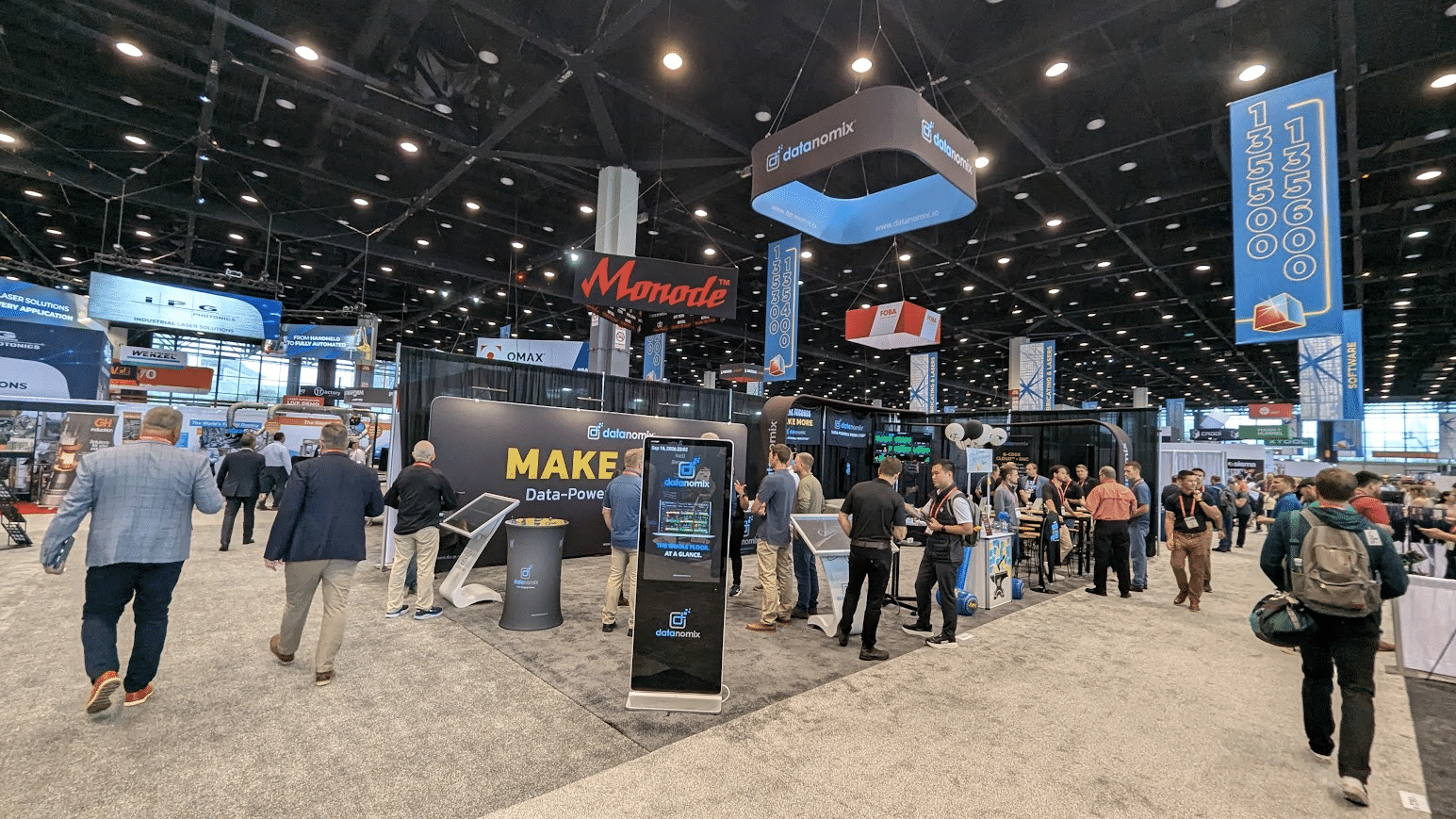
As I Write from the Sky, It’s All About Ground Truth: A Recap of IMTS 2026
As I write this blog, I realize I am carrying on a tradition of which I was not previously aware. Our first IMTS was in 2022, and I was so energized I wrote the recap somewhere between the airport and the plane. 2024 marked our second IMTS, and I can picture being over Lake Michigan, obligated to start writing about what I had just experienced.
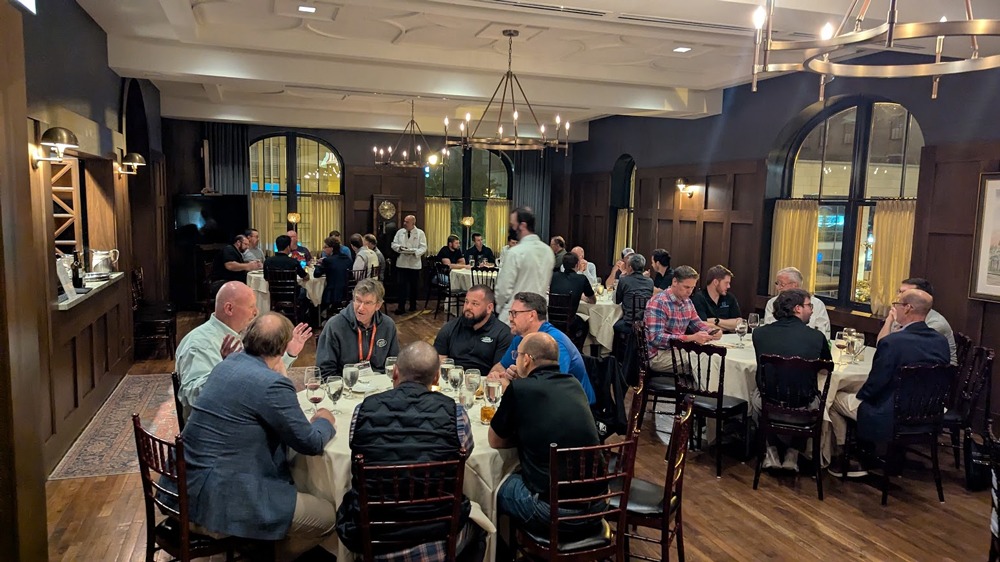

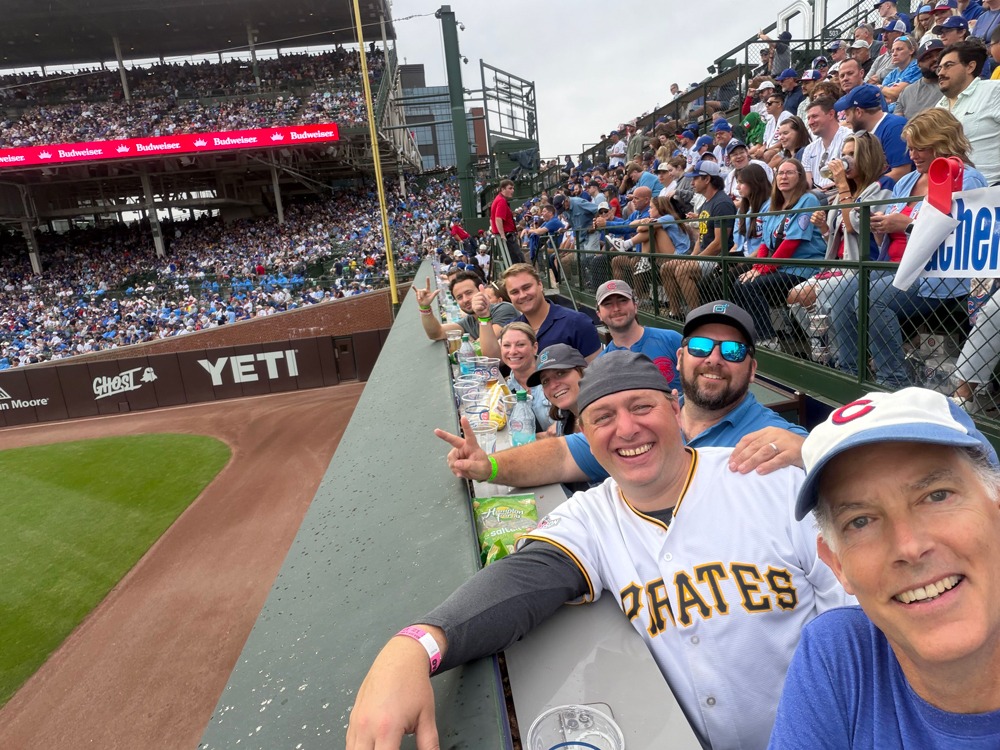

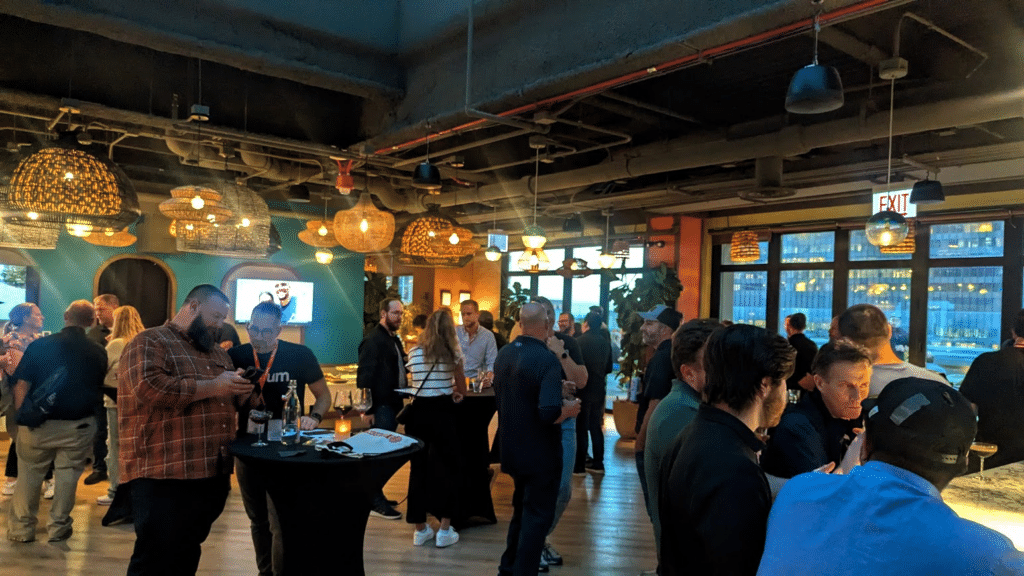
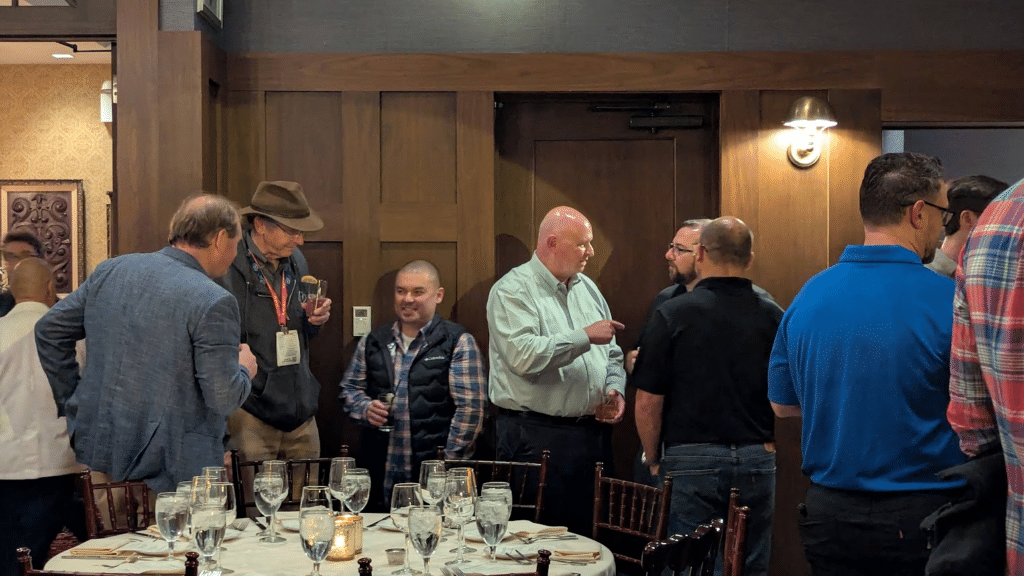
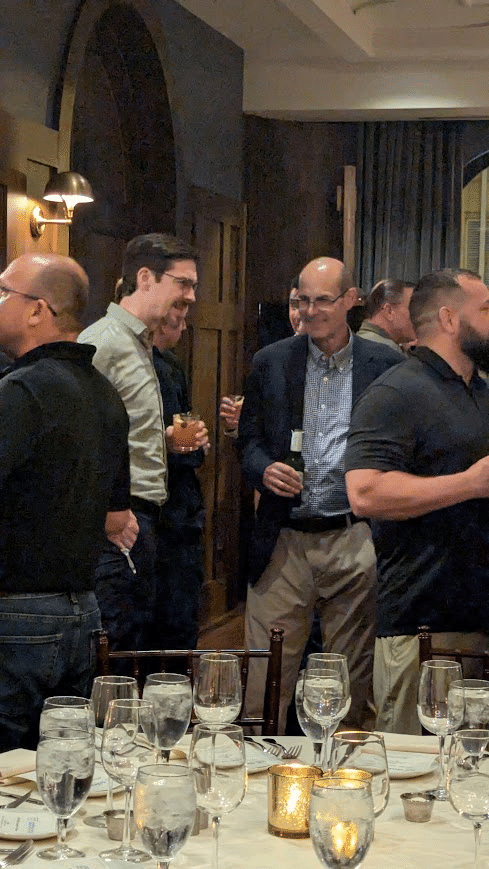
And now in 2026, after 6 days in Chicago including booth setup, a Cubs game with the team, a joint happy hour with our partner Fulcrum, a customer appreciation dinner, two in-booth interview sessions with Tony Gunn, and several nights in a condo with 10+ team members doing what I am only allowed to publicly describe as “team building”, I once again find myself so amped as I depart Chicago that I must write while it is fresh.
IMTS 2026 was awesome in every way.
Customers
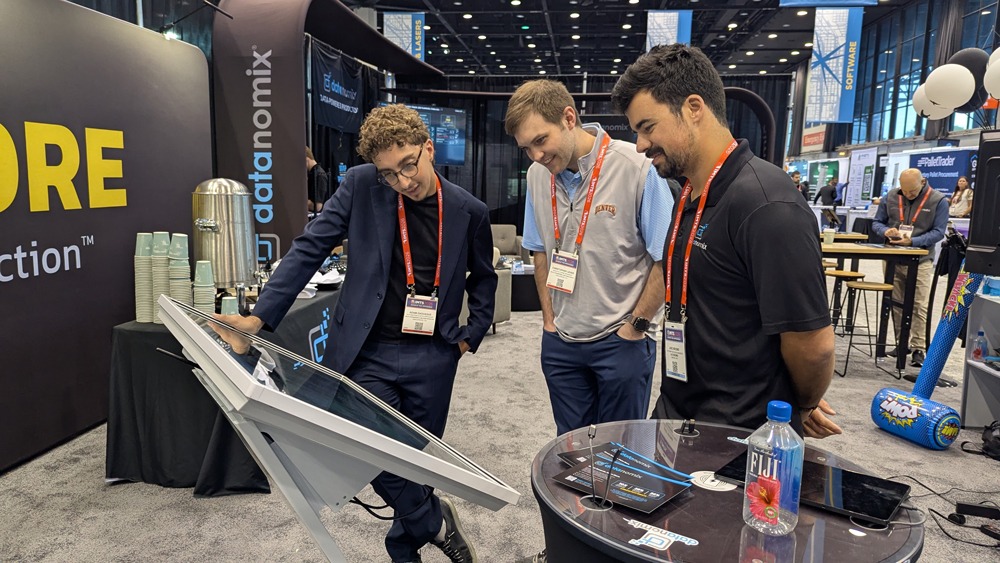
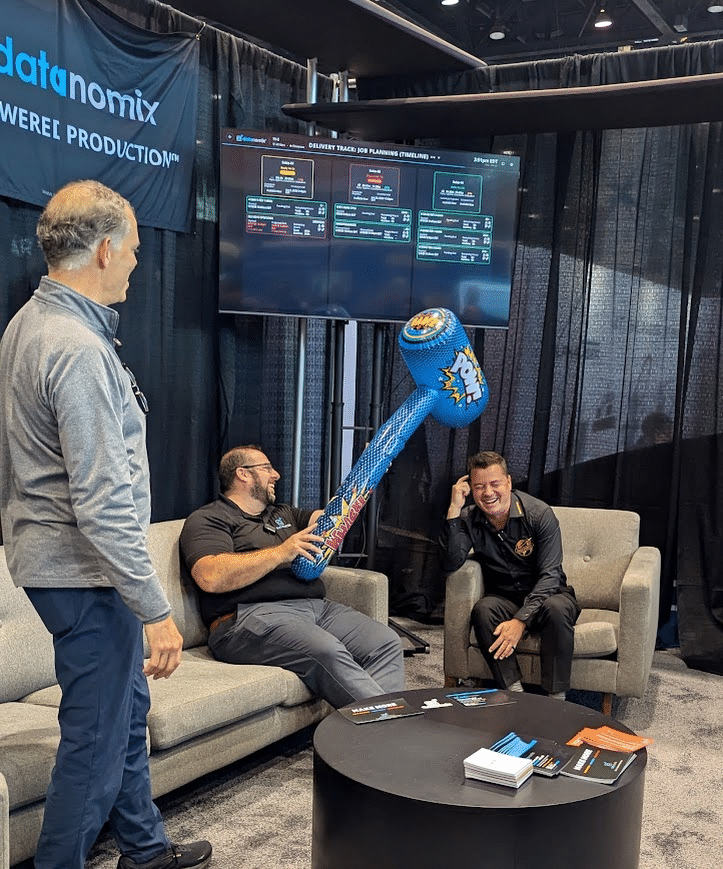
We had 60+ current Datanomix customers visit our booth Monday through Saturday. They may not realize it, but those visits recharge us through the 10+ hour days on our feet. Our Customer Success team embeds as an extension of the manufacturers we serve, so we feel the joys and trials of their businesses, the growth of the people we work with, and the enthusiasm for where we are going next. Our Coach’s Workbenches were occupied nearly the entire show as both long-standing and brand-new customers sat down with their Datanomix Coaches to review challenges, define opportunities, and learn about the newest innovations.
What we appreciated most about these in-booth experiences with our community is how much they help us get better at helping them get better.
Themes of the Show
This is where everyone is probably expecting a missive on AI, the word “agentic”, and a tidy little flourish at the end of the sentence, preceded by the oh-so-overused emdash. There was a lot of AI-first messaging at this IMTS. I saw lines like “The one AI-native platform for all your manufacturing data” and “The Agentic Platform for Manufacturing AI”. I have no idea what either of those means in practice, and I reckon many prospects do not either (and perhaps not even the companies saying it). We have been working at the heart of manufacturing data challenges for years, across hundreds of customers, thousands of machines, and problems worth millions to our users. Unlike those messages, one of our company values is always “what before how”.
Whether something is agentic or not is a “how.” The problem that needs to be solved is a “what.”
For example: “My ERP’s schedule sucks because it doesn’t understand machine platforms, can’t split work orders, and gets confused by multiple ops” is a “what”.
“The agentic way to schedule jobs” is someone telling you “how” without understanding what you need to do. Do agents address those constraints? Maybe they do, and maybe they don’t. When messaging flies above the clouds, it’s often because the company saying it hasn’t spent enough time on the ground, where the constraints and people fighting them actually live.
So how do you know a vendor understands your practical challenges when there’s so much AI-can-do-everything noise? We like to say that ground truth is undefeated at providing clarity.
The ERP Complaint Booth
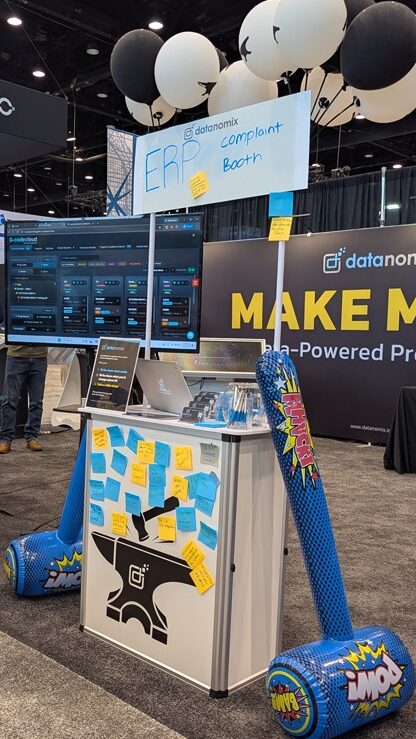
A massive hit at the show was our ERP Complaint Booth. Complaints about ERP are not only common and visceral (who knew?), they are a gateway to manufacturing’s largest data challenges. Scheduling, labor tracking, job costing, on-time delivery planning – all supposedly core competencies of the ERP – sat at the bullseye of what visitors wrote down. We even had several ERP companies come by to take pictures, smile, laugh and say “that’s harsh, but it’s true.”
The ERP has held the crown of “system of record” for decades. And while it is the system of record, it is also the system of discord.
ERPs constrain us with their schema, interfaces, modules, and just about everything else. Nobody trusts what’s in the ERP because it’s human-entered, based on best guesses, and unreconciled with reality. ERPs say what was, not what could be, what should be, or how to make it better. For years, manufacturers believed they had to live with the ERP like it was a bad weather day: “it’s just how it is, maybe it will be sunnier tomorrow, but probably not.”
Enter AI
Where AI has been tremendously valuable is in opening our collective minds to data-oriented problems. “Why can’t I just…” is a question manufacturers should have been asking their ERP vendors years ago. If they did, those vendors exploited the constraint they created by charging exorbitant service fees to do something they should have been doing with your data all along! Even worse, they often required deep customization to give you that ability, locking you in further to their grasp. The borderless world of AI finally makes clear how sad and large the historic ERP capability gap really is. And people are tired of the same bad weather.
Unlocking Insight
AI’s flattening of data boundaries sets the stage for the next few years. If ERPs have held us back, are not innovating (on balance), and AI opens up what we can do with our data, where exactly are we going?
In our opinion, we’re headed for a fight for actual ground truth. Ground truth in precision manufacturing requires multiple data sources, looked at together and coherently.
- The ERP knows what you planned. Part numbers, quantities, due dates, routings, what you quoted it at, what you’re getting paid. That’s the commitment, and it’s the only place the business intent lives.
- The machine knows what actually happened. Cycle time, setup time, spindle load, feed override, door opens, downtime, alarms. Nobody had to type any of this in. It doesn’t round up, doesn’t forget, and doesn’t soften why a job didn’t run the way it should.
- The G-code knows what was supposed to happen. This is the one everybody skips. The program is the actual process definition. It tells you the operations, the tool changes, the intended cycle, the platform it was written for, and what rev you’re running. It is the plan at the only level that matters: the level where metal comes off and expensive machine time runs the meter.
Any two of these data sources get you an open-ended argument. Reconciling all three gets you on your feet and solving problems.
Sorry Meat Loaf, But Two out of Three Ain’t Good
ERP plus machine data tells you the job took 14 hours instead of the 9 you quoted. Great, now what? You know you lost money, but you don’t know where, and you don’t know if 9 was ever real or achievable.
Machine data plus G-code tells you the process ran clean but says nothing about whether the job was profitable or even supposed to be on that machine this week.
ERP plus G-code is the promise and the plan, both written before anyone touched metal. You can build a beautiful schedule out of the two of them and never once find out that op 30 has never hit its cycle time on that machine.
Put all three together and the questions manufacturers have been fighting about for thirty years stop being questions and start being targeted actions.
- Scheduling. The ERP says this work order is due Thursday. The program says it’s four ops, and here’s what each one requires. The machine data says that op on that platform actually runs at 41 minutes, not the 28 in the router, and that spindle has been down twice this month. With the whole picture in one place, you can answer the only question that matters: is Thursday real, and if not, what can I do to make it real?
- Job costing. Not “the job lost money.” The job lost money on op 30, on second shift, because the setup took three hours against a standard of one, and the program was running a rev nobody costed that had drifted from the original plan. That’s a fixable problem. “We lost money on that part” is not.
- Quoting. You stop quoting from memory and gut. You quote from what that geometry actually did on that machine, the last eleven times you ran it, with confidence you can make money doing it that way.
- On-time delivery. Stops being a debate in the Monday meeting and becomes a number nobody argues with because you can predict it, achieve it, and believe it.
These are core expectations of manufacturing productivity, and common themes from the ERP Complaint Booth. Not surprisingly, every one of these is historically built on human-entered estimates that nobody trusts, including the people who entered them. That is the real capability gap, not AI, not how agentic you are – trust.
The Next Few Years
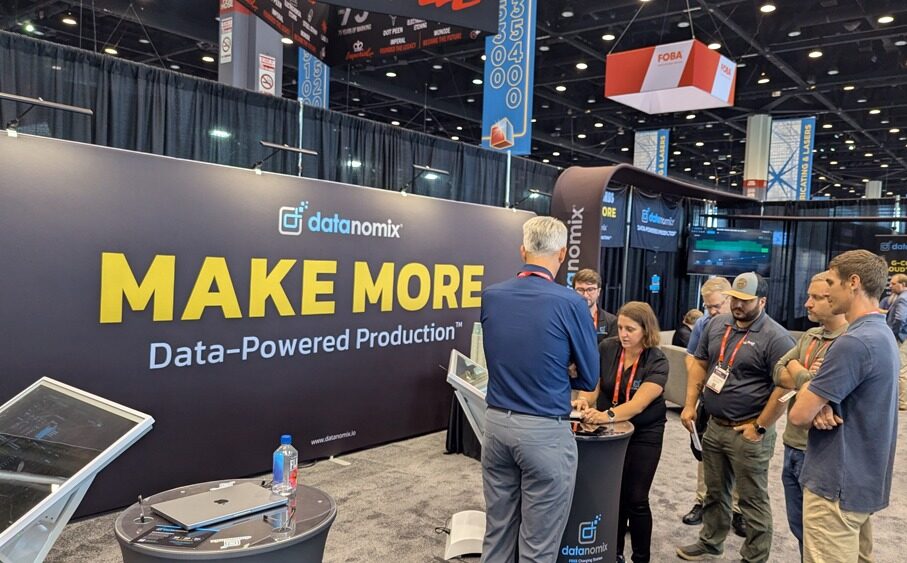
We foresee that the ERPs will serve as the system of record, not because it earned it, but because the rip-and-replace routine has been done so many times now it’s painful to think about again, and, more importantly, unlocking value from the data is bigger than where the data resides. After all, under the covers, the ERP is just a set of data tables. Something else has to evaluate them, manipulate them, and plan with them. Here we go.
This means that the system of insight is up for grabs, and it will not be won by whoever says “agentic” the most times on a trade show banner. It will be won by whoever can stitch the commitment, the program, and the reality into one truth and hand it to a person who has to make a decision before the shift ends.
We’ve been building on that foundation for years because we knew the “what” mattered long before the tools got good enough to make the “how” easier.
Wheels Up and What’s Next
If you filled out a card at the ERP Complaint Booth, we’ve read every one of them, and we will be addressing them over the weeks and months to come, stay tuned.
We will of course be at IMTS 2028, where our booth will probably still say Make More, and the others will have to find something to say other than “agentic”.
Until then, let’s keep questioning the constraints, keep eradicating the complaints, and take the actions necessary for all of us to Make More together.







What’s Your Ground Truth?
Ground truth starts with your own data. We’ll put your ERP, your machines, and your programs side by side and show you where the gap is. Simply request your pilot today.