VIDEO: Secure G-Code Management, Compliance, and the ERP Gap in Manufacturing: An Interview with Gabe Maentz
The truth about G-code traceability, ITAR and CMMC compliance, legacy programs, and the constraints shops have outgrown with their ERP.
Your programmers finish the code. Someone moves it to the machine. Then an operator makes a change at the control, and nobody upstream ever hears about it.
For shops working toward ITAR and CMMC requirements, that gap is a compliance problem. For everyone else, it’s a scrap problem. Either way, secure G-code management comes down to knowing which version ran, who changed it, and when.
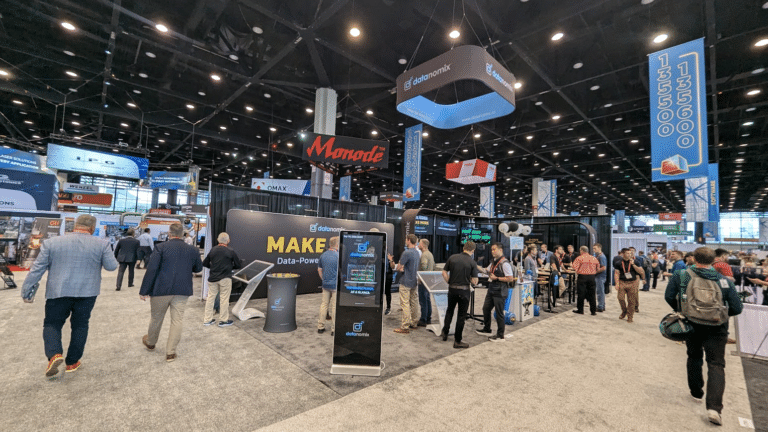
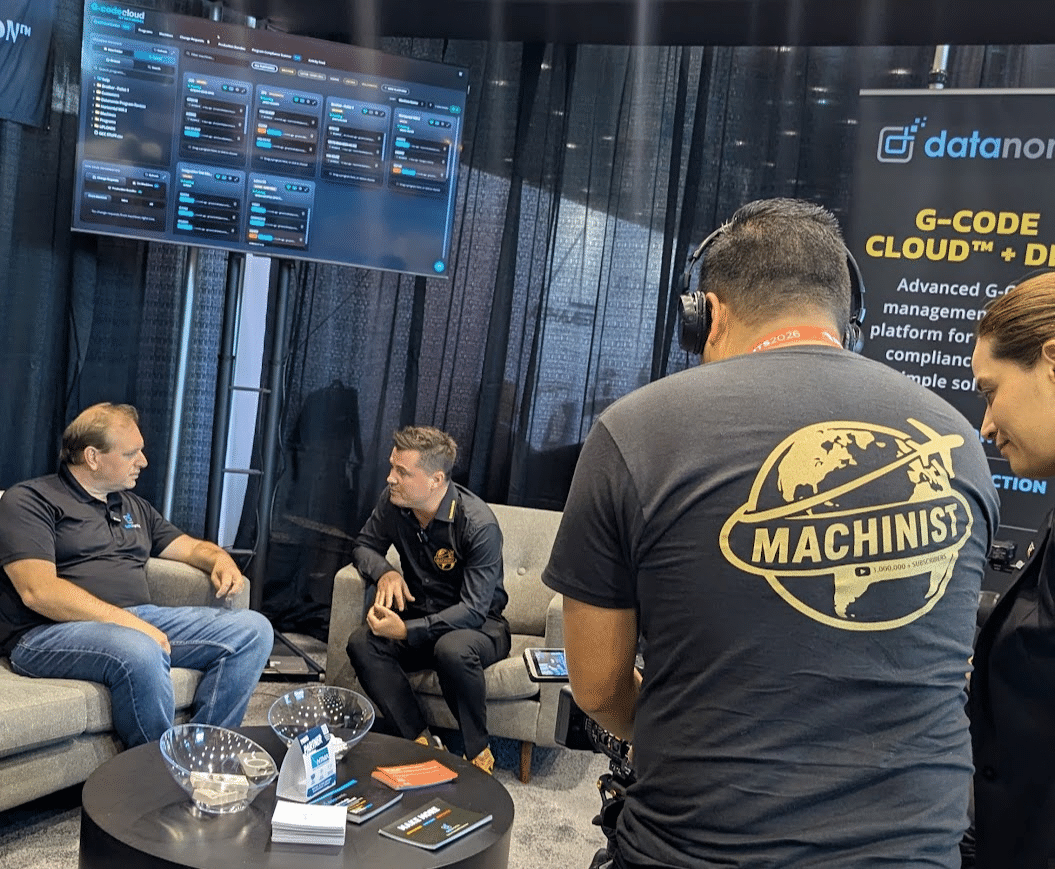
At IMTS 2026, industry voice Tony Gunn caught up with Gabe Maentz, VP of Solutions at Datanomix, to talk about closing that gap and the friction between ERP plans and what actually happens on the shop floor.
Key Takeaways
- Edits at the machine make it back to engineering.
The G-Code Cloud Command Center gives shops one workflow to send programs with drag-and-drop, see changes made at the control, and feed them back upstream. - Traceability shouldn’t stop at G-code.
Digital Production Bundles™ bring the same revision control to setup sheets, tooling sheets, and prints, so operators get the right documents with the right program. - Older programs can become hidden compliance risks.
The Program Compliance Scanner reviews your G-code library, flags files missing revision, author, or creation date, and helps you fix them. - The ERP plan only tells half the story.
The Datanomix ERP connector pairs your plan with real machine data for a clearer view into real-time production performance.
What Does Secure G-Code Management Look Like?
Secure G-code management means every program reaches the machine from one controlled system, every edit at the controller is captured, and engineering always knows which version made the part.
Moving a program from engineering to a machine sounds simple. Proving the right version got there is the hard part, especially when operators make smart adjustments at the control that never make it back upstream.
Datanomix G-Code Cloud + DNC was built for secure file delivery and full traceability. Drag-and-drop transfers and point-and-click workflows make it easy to use, and any edits made at the machine are flagged so anomalies stand out fast.
Everything lives in the G-Code Cloud Command Center: one place to send files, track changes, and close the loop with engineering.
Why Does Traceability Need to Go Beyond G-Code?
Traceability needs to cover setup sheets, tooling sheets, and prints because a correct program paired with an outdated document can still make a bad part.
G-code is only part of what an operator needs to complete a job successfully. Setup sheets, tooling sheets, and prints matter just as much, and they drift out of date just as easily. As more shops move toward paperless workflows, those documents need the same control as the code.
Digital Production Bundles™ ensure that when an operator starts a job, the supporting documents come with it, securely and in the correct revision.
How Do You Bring Legacy G-Code Up to Today’s Standards?
To bring legacy G-code up to today’s standards, scan your full program library for missing required information like revision, author, and creation date, then close the gaps before an audit or rerun finds them for you.
Most shops have programs nobody has touched in years. Standards changed. Requirements changed. The files didn’t. As Gabe hears from customers, the question isn’t whether those gaps exist. It’s how to find them.
The Program Compliance Scanner reviews your full G-code library, shows what’s missing against your standard, highlights what could create compliance risk, and gives you a path to remediate it.
Why Are Shops Rethinking Their ERP?
Shops are rethinking their ERP because the plan alone can’t show what’s actually happening on the floor, and many of the rules built around it come from habit, not need.
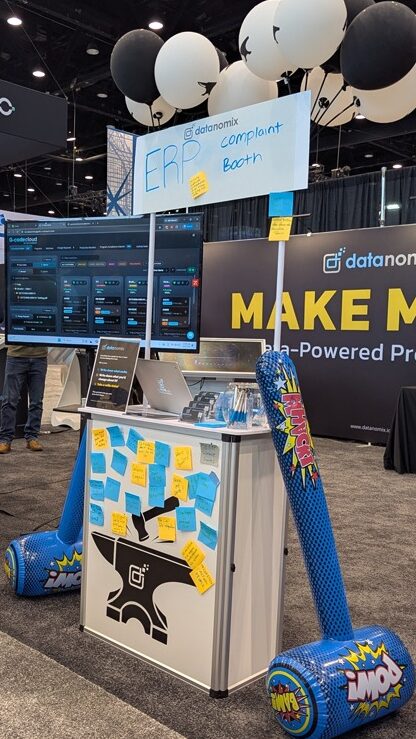
At IMTS, Datanomix set up an ERP complaint booth. Visitors grabbed a Sharpie and posted their biggest ERP frustrations on a wall of sticky notes. The wall filled up fast. Read enough of those notes, and a pattern shows up. It looks a lot like the stages of grief.
ERP holds the plan. Datanomix sees the actuals: parts made, capacity, and utilization straight from the machine. Datanomix ERP Insights puts those side by side, so shops can see how they performed against plan and start knocking down the friction that slows work down.
As Gabe put it, “Some constraints exist because they need to. Others exist because nobody ever questioned them.”
The Bottom Line: Why G-Code, Machine Data, and ERP Data Belong Together
Secure G-code management means knowing exactly which program ran, who changed it, and when. That matters for compliance, and it also fills in the piece most shops are missing.
The ERP knows what you planned. The machine knows what actually happened. The G-code knows what was supposed to happen. Two out of three gets you an argument. All three together are ground truth.
G-Code Cloud + DNC keeps every program and revision tied to the machine that ran it, and ERP Insights lines the plan up against real machine data. See how all three fit together in Greg’s IMTS Recap blog.
Stop Guessing Which Version Made the Part
See how Datanomix helps you send programs securely, catch changes at the machine, and prove compliance when it counts.
Related FAQS
G-code management software compares what’s on the machine to the approved program. G-Code Cloud™ from Datanomix detects edits made at the controller, shows exactly what changed, and sends that information back to engineering. Operators can still make the adjustments they need, and nothing changes without a record.
The most reliable approach is one secure system that stores approved programs, sends them to machines, and logs every revision. Shops that rely on shared drives, USB sticks, or old DNC setups often can’t prove which version actually ran. G-Code Cloud™ keeps revision history, author, and transfer records in one place.
CNC programs for defense parts can contain controlled technical data. That means shops need secure file transfer, controlled access, and a clear record of who created or changed each program. CMMC Phase II is currently delayed, but Phase I obligations remain fully active, so traceability matters today.
Your ERP holds the plan, but it can’t see what the machines are actually doing. The Datanomix ERP connector pulls in ERP planning data and compares it with real production data: parts made, capacity, and utilization. You get a plan vs. actual view without waiting for someone to report it.
G-Code Cloud + DNC is Datanomix’s Gov-Cloud-native, ITAR-compliant platform for managing, modifying, and distributing G-Code.It moves programs from engineering to machines with drag-and-drop simplicity, tracks every revision, and flags changes made on the shop floor.
FIRST DOWN WEBINAR SERIES:
Moving the Chains in Production & Performance
Steady progress doesn’t come from one big play. It’s built one first down at a time.