
Why Manufacturers Are Struggling with Preventative Maintenance, And How to Fix It
Nearly half of manufacturers say overdue maintenance is their biggest issue. Learn how high-performing shops are using real-time data to stay ahead of downtime and keep machines running strong.
If you’re feeling the pain of machine issues piling up faster than you can address them, you’re in good company. We polled precision manufacturers to understand what’s really slowing them down. The responses paint a clear picture: shops aren’t just fighting downtime, they’re fighting a lack of visibility, inconsistent or overdue processes, and systems that can’t keep up.
And the kicker? These challenges are absolutely solvable with the right data and workflows in place.
Let’s break down what manufacturers told us about preventive maintenance and downtime, and what high-performing shops are doing to address them.
Machine Maintenance Is Long Overdue.

When we asked, “What is your biggest maintenance challenge?”, nearly half of the respondents (48%) pointed to overdue maintenance as their top issue.
Another 24% said unexpected breakdowns were hitting them hardest.
That’s a one-two punch:
- Preventive Maintenance isn’t happening on time.
- Machines are failing because of it.
The downstream impact is predictable: lost production hours, late jobs, and a constant game of catch-up. Shops aren’t falling behind on maintenance because they don’t care. They’re falling behind because they don’t have a system that makes preventive maintenance unavoidable.
This is also where the data starts to break. When maintenance slips or happens late, history no longer aligns with how the machines are actually being used. Downtime appears random, failure patterns blur, and teams lose confidence in the numbers.
High-performing shops tie planned maintenance directly to actual machine hours, so preventive work happens when it should, and the data stays clean. When maintenance timing is accurate, everything downstream gets easier to understand and improve.
That’s exactly why Datanomix is tackling Planned Maintenance, making it a simple, automated way to keep work visible, scheduled, and on track across the whole organization.
Unplanned Downtime Isn’t Measured, and That’s a Problem
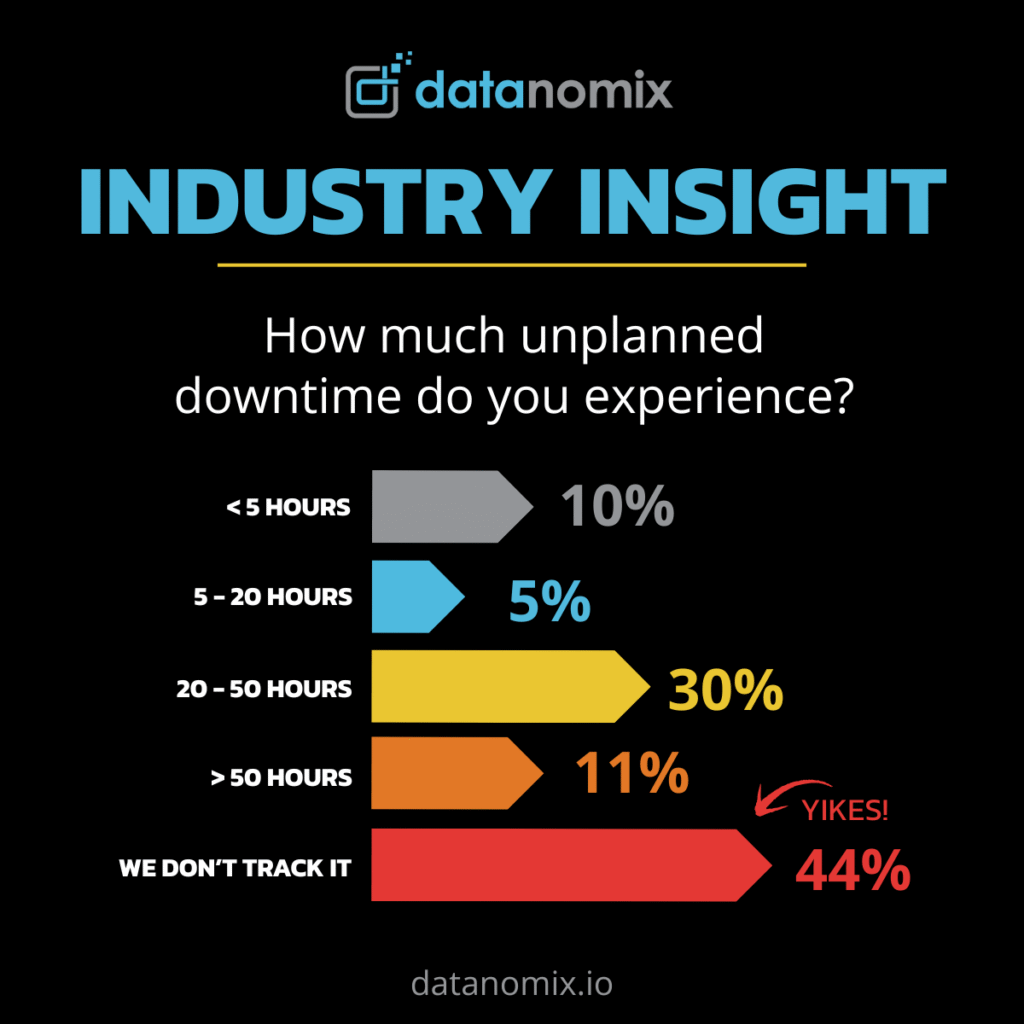
Then we asked, “How much unplanned downtime do you experience per month?”
Here’s the eye-opener:
- 44% said “I don’t know (we don’t track it).”
- Another 30% estimated 20–50 hours per month
- 11% are seeing more than 50 hours
If almost half of the shops aren’t tracking unplanned downtime, they’re making decisions in the dark. Without numbers, it’s impossible to answer basic questions like:
- Which machines are costing us the most?
- Is this a maintenance issue or a training issue?
- Should we adjust PM intervals or replace the equipment altogether?
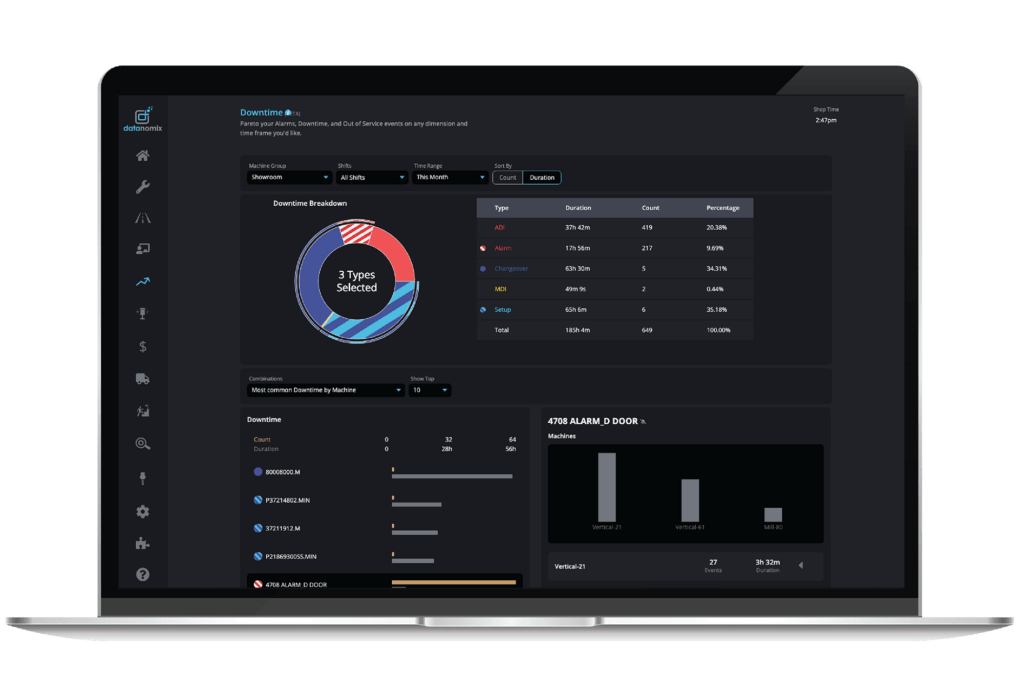
This is exactly where the Datanomix Downtime Report shines. By automatically capturing what happened, when, and for how long, leaders finally get the truth they need to plan budgets, eliminate chronic issues, and justify investments.
Maintenance Tools Are Still… Basic
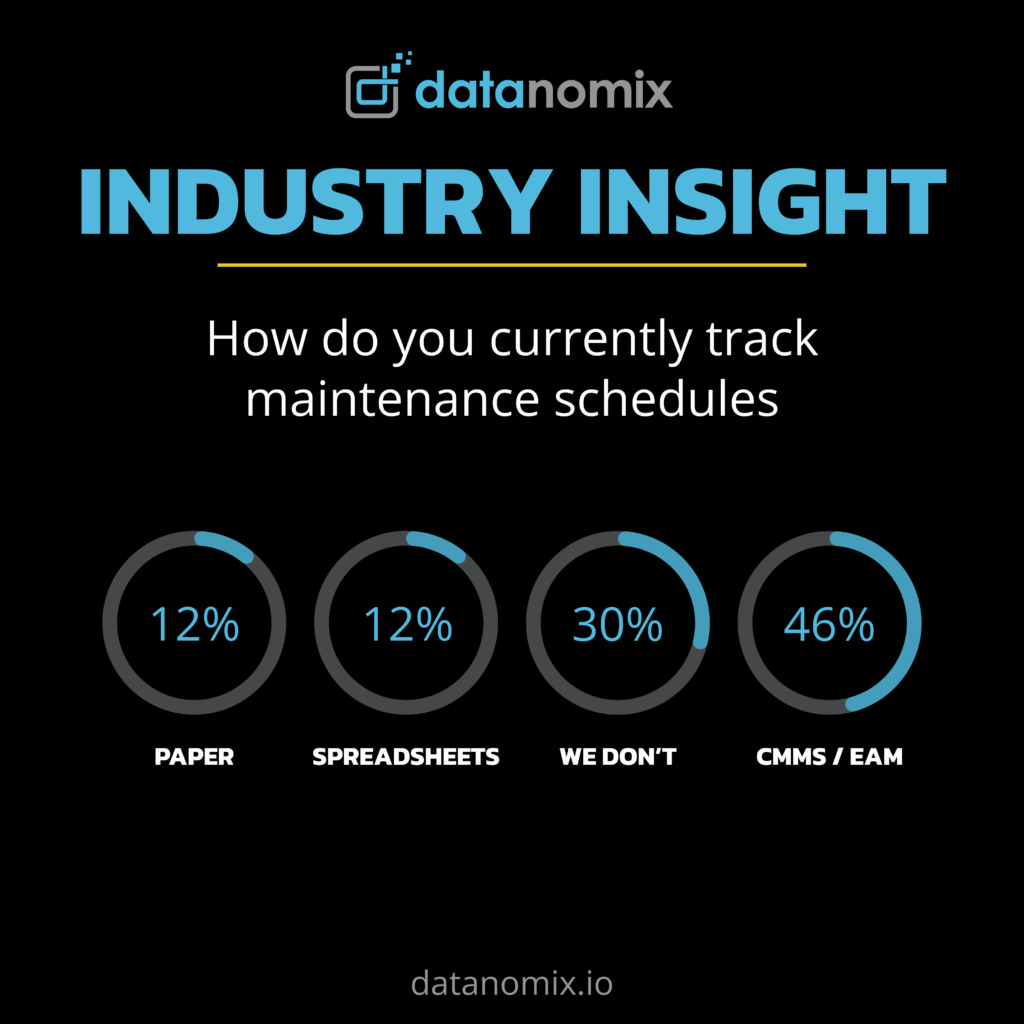
We also asked, “How do you currently track maintenance schedules and work orders?”
The answers were telling:
- 46% use a basic CMMS/EAM
- 30% don’t have a real system at all
- 24% rely on spreadsheets or paper
It’s no surprise shops are missing preventative maintenance windows; half of them are using tools that were never built to track it. When your system doesn’t tie directly to machine runtime, everything becomes guesswork.
Datanomix eliminates that guesswork. Preventative maintenance is captured based on actual spindle hours and actual machine usage, not “should be” estimates or clipboard math.
What the Best Shops Are Doing Differently
Across every conversation we have with high-performing manufacturers, one pattern stands out: Maintenance isn’t treated as a cost center; it’s treated as production insurance.
Here’s what that looks like in practice:
1. Weekly Preventative Maintenance Reviews
Leadership reviews what’s overdue, what’s upcoming, and when the best windows are to schedule machine maintenance work. No surprises.
2. Operator-Level Escalation
Using the Datanomix Machine HUD, operators can instantly flag issues with blinking alerts that prompt maintenance to act right away.
3. Clear Ownership Through Kanban
With Datanomix’s built-in Kanban board, maintenance tasks get assigned like any other priority work, with due dates, owners, and accountability.
4. Real Data for CapEx Planning
Downtime Insights help leaders separate “annoying but fixable” from “it’s time to replace this machine.” This shift from reactive to disciplined, from gut feel to data, is where shops unlock hours of machine capacity without buying a thing.
The Bottom Line: Maintenance Shouldn’t Be a Mystery
Our polling confirmed what we see on shop floors every week:
- Maintenance slip because no one has a reliable system
- Downtime goes untracked because it’s hard to capture
- And shops end up paying for it in lost time, missed deliveries, and frustrated teams
But with real-time visibility, automated triggers, and workflows that keep maintenance in sync with production, you can take back control. Machine health stops being a guessing game and starts being a competitive advantage with Datanomix Machine Track.
See What Maintenance Looks Like With Real-Time Machine Data
With Datanomix, teams define shutdown windows in advance, mark machines as “out of service”, and automatically capture downtime as it happens, giving clear ownership before small issues turn into big ones. This keeps dashboards and reports aligned with real production performance.
Want to see how top shops keep maintenance on track and machines producing?
Want more insights (with solutions) like this?
Check out what’s really causing downtime, and what you can do about it.