
Planning Meets Reality (And Reality Wins)
Manufacturers are planning in ERP, but running production in reality. Our latest poll results show where the disconnect starts.
Every manufacturer knows the feeling.
The week starts with a solid plan. The ERP schedule is built, jobs are prioritized, due dates look achievable, and everything feels… under control.
Then comes Monday morning…
A machine goes down. A hot job cuts the line. Material shows up late. A setup takes longer than expected. Suddenly, the schedule that looked perfect inside your manufacturing ERP no longer reflects what actually happened in production. That gap between plan and reality is where most shops live today. And in our latest polls, manufacturers confirmed it loud and clear.
Integration Is Still the Exception, Not the Rule
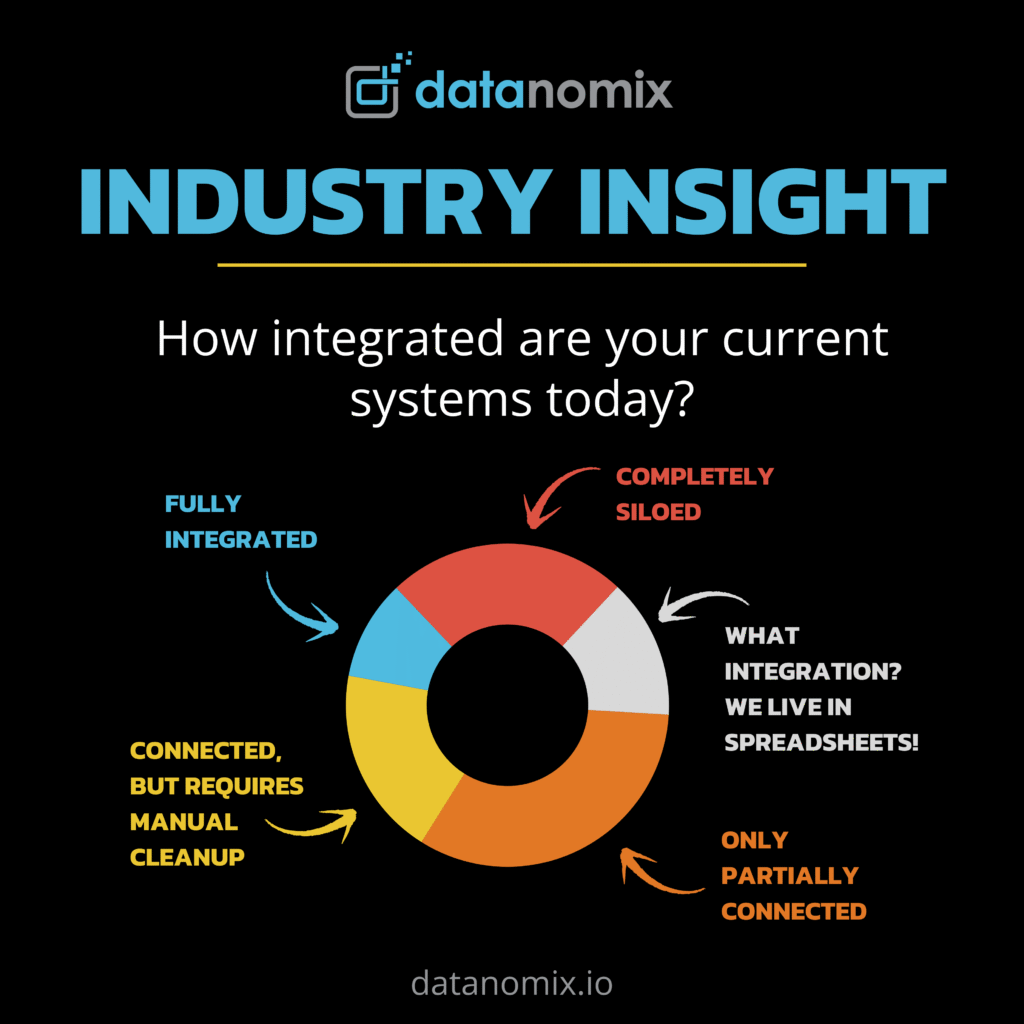
We started with a basic question: How integrated are your current systems today?
Only 10% of respondents said their systems are fully integrated and working well. More than 90% reported being partially connected, siloed, or still heavily dependent on spreadsheets.
That means most manufacturers are still operating with disconnected systems in which the ERP, the shop floor, machine data, and scheduling tools don’t work together naturally. Instead, teams are stuck doing the integration manually: updating schedules by hand, re-keying job status, chasing down WIP updates, and patching the truth together in Excel.
Not exactly the future we were promised.
The ERP Trust Gap

Even when manufacturers have an ERP system in place, the real question is whether anyone actually trusts it.
We asked: How confident are you that your ERP reflects what’s actually happening on the shop floor?
The results landed right in the uncomfortable middle. 42% of respondents rated their confidence at a 5 out of 10. Only 8% said they were very confident, while another 8% admitted it’s basically a coin toss.
That’s a huge signal. If your team doesn’t trust the ERP schedule, they won’t run production from it. Instead, they’ll rely on tribal knowledge, floor walks, side conversations, and spreadsheets that “tell the real story.”
And once that happens, your ERP stops functioning as a true system of record. It becomes a planning tool that looks great on paper, but can’t keep up with the pace of real production.
This is exactly where the missing link between plan vs actual begins, and why connected manufacturing has become such a competitive advantage.
When the Plan Breaks, the ERP Doesn’t Catch Up

Next, we asked the question that hits even harder: When something goes off-plan on the floor, how long does it take for your ERP schedule to reflect it?
The most common response wasn’t “hours” or “next day.”
It was: It doesn’t update!
In fact, 63% said their ERP schedule doesn’t update when production changes. Only 21% reported immediate updates.
That’s a massive disconnect. If your manufacturing ERP schedule can’t stay current in real time, it becomes a static document rather than a living operating system. By the time the ERP catches up, the team has already firefighted their way through three other problems.
As our Founder and CEO, Greg McHale, said on our recent webinar Planning Meets Reality, “Datanomix exists to tell you the story your machines have been trying to tell you all along.”
The Real Bottleneck: Knowing What’s Happening with WIP

Once production starts drifting off plan, the most urgent question becomes simple: where is the job right now?
We asked manufacturers which plan vs. actual challenge hits their shop the hardest. Two responses rose to the top:
- 29% cited WIP visibility and completion timing
- 18% pointed to job performance vs quoted expectations
What’s striking here is that these aren’t “planning” problems. They are execution problems. Shops aren’t struggling to create schedules or generate work orders. They’re struggling to stay grounded in what’s actually happening once work is in motion.
Without real-time visibility into work-in-process, completion timing becomes guesswork. Customer updates turn into fire drills. And schedule accuracy becomes something you chase after the fact instead of something you manage in the moment.
It’s also telling that nearly a third of respondents essentially signaled that multiple issues are hitting at once, which is exactly what happens when systems aren’t connected, and the floor starts moving faster than the ERP can track.
The universal gut-punch in manufacturing is still the same: when someone asks, “Where’s my part?” and you realize you don’t have a confident answer.
What Manufacturers Want Next Isn’t Another Report
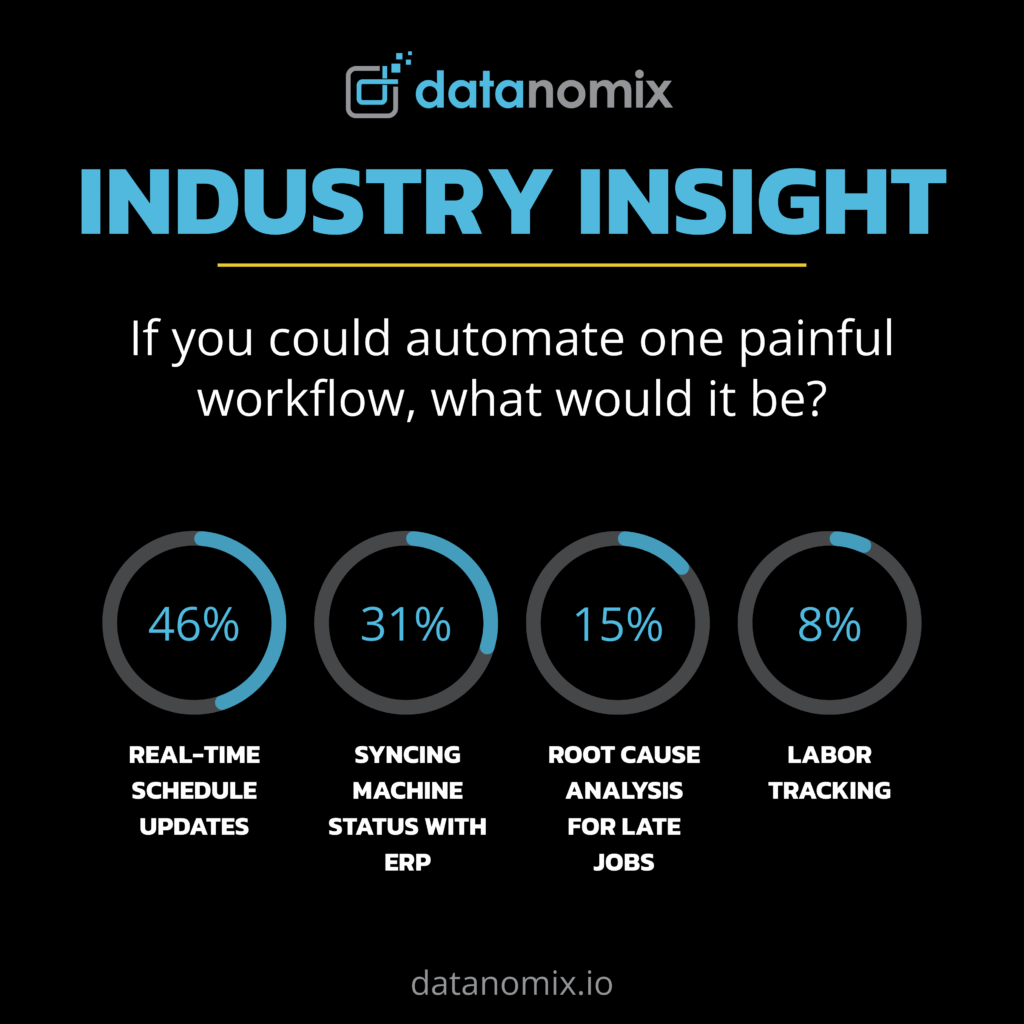
Finally, we asked: If you could automate one painful workflow tomorrow, what would it be?
The top response by far was real-time schedule updates (46%). Next was syncing machine status with ERP (31%).
Manufacturers aren’t asking for more dashboards. They’re asking for fewer surprises. They want ERP systems that don’t just create a plan; they also stay accurate as conditions change.
Sunny Han, Founder & CEO at Fulcrum, captured the bigger shift happening across the industry: coordination and live connected data are becoming the bottleneck, not machine capability.
That’s the future of modern manufacturing: not just planning, but execution that stays connected to reality.
The Takeaway: Planning Isn’t the Problem. Disconnection Is.
Most manufacturers don’t struggle because they can’t build a schedule. They struggle because the schedule no longer holds true the moment production starts.
The next era of manufacturing performance will belong to shops that can close the loop across ERP scheduling, shop-floor execution, machine monitoring, WIP visibility, and real-time plan-versus-actual tracking.
No spreadsheets required. No manual cleanup. No delays between what’s happening and what the system reports.
Reality always wins. The question is whether your ERP is keeping up.
Ready to see what a connected shop looks like?
Book a demo to see how Datanomix brings target schedules and real-time shop-floor performance together so your plan stays accurate, your team stays aligned, and surprises no longer disrupt the schedule.