Your Monitoring System Tells You What Happened. Can It Tell You What To Do?
Not all production monitoring is created equal. Here’s why.
Most shops that buy production monitoring expect it to answer one question: what’s going on out there? And most systems do…sort of. They hand you utilization numbers and cycle times and call it a day.
Then you’re standing in front of a screen at 7 a.m. trying to figure out what any of it means. Your worst machine is running at 38%. Now what? You’re thinking what every shop owner thinks: I know my utilization. It feels low. What am I supposed to do about it? You walk over to it. By the time you get there, it’s on a new job. The number’s already stale, and you’re back to guessing.
That’s not a data problem. That’s a what-do-I-do-about-it problem. And most machine monitoring was never built to solve it.
Here’s Where Other Solutions Fall Apart
Machine monitoring shouldn’t make you do work to find the answers you need. You should be focused on making more.
But that’s not how most of it works. If your monitoring system needs an operator to tell it what’s happening, it doesn’t understand your process. It’s collecting data and hoping you figure out the rest. Entering every part number. Estimating cycle time. Tracking production in secret for 30 days to build a baseline. You’re just guessing at performance. Or worse, your operators enter a reason code after something’s already gone wrong. Now you’ve got numbers you can’t fully trust.
Kylan Hastreiter knows that story. Before Datanomix, his shop bought monitoring to hit aggressive growth goals. It didn’t take:
“Not only did I have to be my own data analyst, but I also had to be the data engineer to actually even create the whole system. Even though I paid those guys to create the system for me.”
— Kylan Hastreiter, Vice President, Hastreiter Industries
The tool was supposed to hand them answers. Instead, it handed them a second job. So much so that Hastreiter walked away from monitoring for two years before finding a system that actually did the work for them.
What Monitoring Should Actually Do:
We built Datanomix because manufacturers deserved better. So we started with how you actually want to use the data and automated the rest. We connect to your controllers and start analyzing every job immediately. No part setup. No estimated times. No Operator Input™. And our machine learning builds the benchmark from your real runs, and it gets smarter with every part.
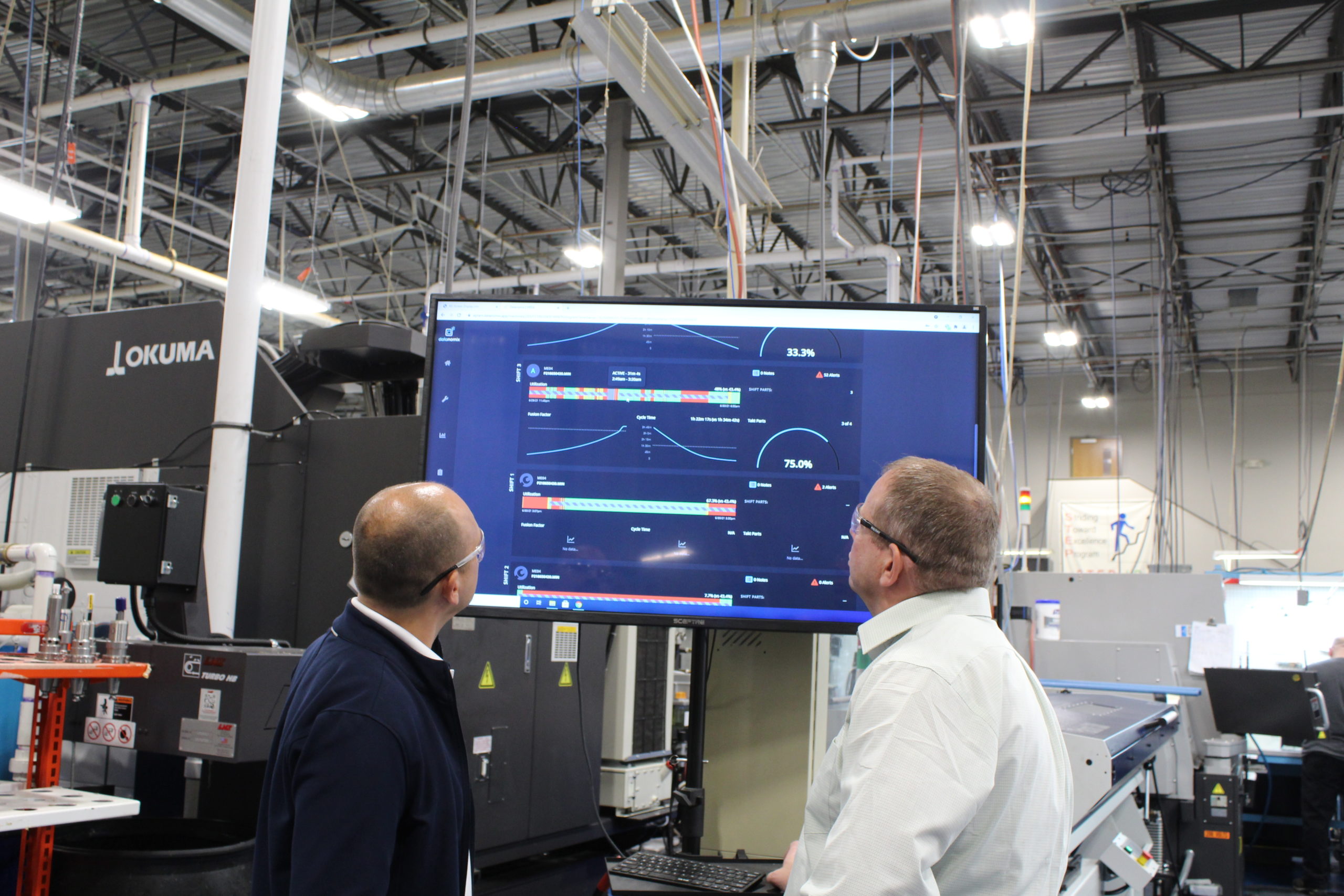
From there, you get a score on every job in real time, measured against that job’s own benchmark, not some industry average. Context shows up while it still matters, so people move to the jobs that need them. And the right data is already up on the TVs on the floor when the day starts, so nobody’s chasing paper for the morning meeting. And the Mobile App provides factory status wherever you are.
Then it keeps going. ERP Insights puts your plan side by side with actual machine performance. AI shows up when and where it matters most. Automated workflows keep engineering, planning, operations, and sales on the same page. G-code compliance, audit tools, and digital production bundles take the shop floor paperless and cut the risks that cost you contracts.
Clean data was never the finish line. Knowing what to do with it is.
That’s why we put the right view in front of the right person at the right moment. The morning huddle. The mid-shift check. The end-of-day review. Nobody’s hunting through dashboards. And Kick-Ass Coaching puts real manufacturing pros alongside your team. People who’ve been on your side of the machine, not just the software side. They turn what the data says into what the floor actually does. Remember that what-do-I-do-about-it problem? That’s the part most monitoring skips. It’s the whole reason we built ours to answer it.
“Kick-Ass Coaching is the most important thing. We have all the data, but being able to actually implement improvements is what will drive us. Now that we have Datanomix, it’s kick-started the team in the right direction.”
— DJ Lafferty, CNC Process Engineer, Mayhew Tools
The Proof Is On The Floor
Across our top customers, overall factory performance climbed 33.5% after Datanomix went up on the TVs on the floor. That’s machines running more, more parts out the door, and more money staying in the business. OMW Corporation put live machine data in front of a customer in a single meeting and walked out with $2.5 million in new business. Same 43 machines they already owned. Now running 12% harder.
Here’s how you get there. It starts with the Prove It Pilot Program. 30 days, aimed at your single biggest production headache. We run three plays. Get the right data on the TVs where the floor can see it. Put real-time alerts on the problems that matter. Go after the waste hiding in the gaps. Most shops find an extra hour of uptime per machine, per day. You prove it on your own floor, with your own parts, before you commit to a thing. And it doesn’t stop when the Pilot ends — that’s where Datanomix Playbooks and your coach take over.
For most of these shops, we weren’t their first monitoring system. We were the one that stuck. Hundreds of manufacturers made the switch to Datanomix after monitoring that promised the world and delivered a dashboard. Twelve of them tell it straight on the customer wall. It’s the same story every time: we tried monitoring before, it didn’t work, this one does.
If you’ve been let down by other monitoring solutions before, or are comparing options for the first time, we get it. That’s exactly why we built our software and customer experience differently.
FIRST DOWN WEBINAR SERIES:
Moving the Chains in Production & Performance
Steady progress doesn’t come from one big play. It’s built one first down at a time.