How to Build a Culture of Efficiency in Manufacturing (Even When Labor Is Tight)
Efficiency Isn’t Optional Anymore.
Too much work, not enough people. Sound familiar? In manufacturing today, efficiency isn’t a nice-to-have—it’s the only way forward when skilled labor is scarce. A strong culture of efficiency enables you to maximize the potential of your team, equipment, and processes. It reduces frustration, boosts morale, and strengthens your reputation as an employer of choice—all while improving profitability. Here are six practical steps to establish and maintain an efficient manufacturing culture, even in a tight labor market.
1. Leadership Must Lead by Example
Efficiency starts at the top. Leadership must fully commit—not just in words, but with actions and resources. This means:
- Investing in training, technology, and tools that drive efficiency.
- Supporting process improvements, even when they challenge the status quo.
- Collaborating with teams and embracing ideas from any level.
- Modeling the behaviors you want to see: open-mindedness, accountability, and flexibility.
When employees see leadership embracing change, they’re far more likely to engage.
2. Communicate Openly and Often
Transparent communication keeps everyone aligned on goals, challenges, and wins. Involve employees in setting benchmarks and problem-solving. Open communication fosters trust and gives people ownership in improvement efforts.
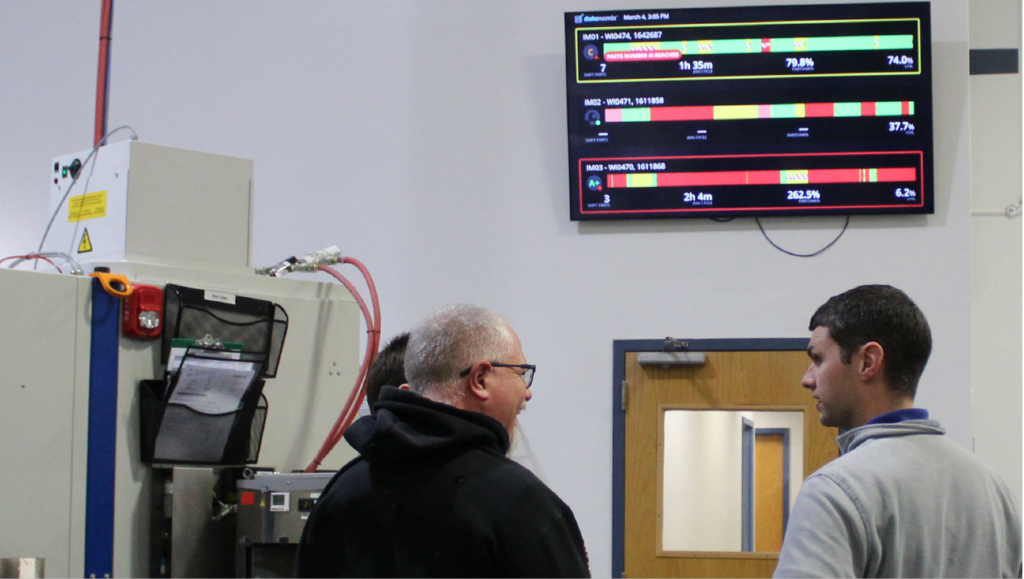
Pro Tip: Avoid relying on manual data collection, as it adds more work to already busy schedules. Real-time Production Monitoring platforms like Datanomix automatically collect and share live performance data across TVs, mobile devices, and desktops—giving your entire team instant visibility without extra effort.
3. Invest in Continuous Training
A culture of efficiency requires a culture of learning. Ongoing training helps your team adapt to new technology, refine skills, and develop problem-solving abilities. Look for opportunities in:
- Technical skills (machining, CAD/CAM, metrology)
- Soft skills (communication, time management, leadership)
- Adult education providers, NIST MEP centers, and online resources
Free content from Titans of CNC and YouTube is a great supplemental tool. And don’t underestimate the power of internal knowledge—use your best employees to mentor others. When you invest in your people, they’re more likely to invest in you.
4. Regularly Review and Optimize Processes
Continuous improvement means regularly evaluating your processes. Ask frontline employees where the bottlenecks and frustrations are—they know better than anyone. Then prioritize fixes based on their financial impact.
Real-time data from automated machine monitoring systems doesn’t just validate what your team sees—it also uncovers hidden inefficiencies that manual observation can miss.
5. Reward Efficiency Wins
Recognition matters. Celebrate improvements and reward employees who embrace efficiency. Incentives don’t always need to be financial—public recognition, time off, company events, or small perks can all be meaningful. The key is to tie rewards directly to measurable improvements. When people see that their efforts lead to positive change, motivation grows.
“With Datanomix, the entire company is focused on fixing the things that don’t go as well as planned. So it’s a motivator for the entire company—we know exactly how we are doing and where we can improve. Our effort creates a higher score.”
Jack Russell, owner and CEO of Rolar Products in Muskegon, Michigan
6. Leverage Smart Technology
Technology is one of your best allies in driving efficiency. Focus on tools that deliver real ROI, such as:
- Automation to reduce repetitive tasks
- Project and process management software to streamline operations
- Real-time data analytics to empower decision-making
Datanomix gives you instant visibility into your shop floor, without requiring any operator input. Your team gets live insights into machine performance, job progress, and shift productivity—allowing them to fix issues before they become costly problems.
A Culture of Efficiency Pays Off
An efficient manufacturing culture doesn’t just help you survive a labor shortage—it sets your shop up for long-term success. You’ll see:
- Higher productivity without burning out your team
- Lower costs through reduced waste
- Happier employees who feel empowered and respected
- Stronger customer satisfaction from on-time, high-quality deliveries
Datanomix helps you build this culture with real-time insights that make great work easier. Ready to see it in action?