Key Takeaways from the Paramount Stop of The Make More Tour
Discover the insightful conversations, honest perspectives, and a behind-the-scenes look at how innovative shops address real-world challenges in Salt Lake City.
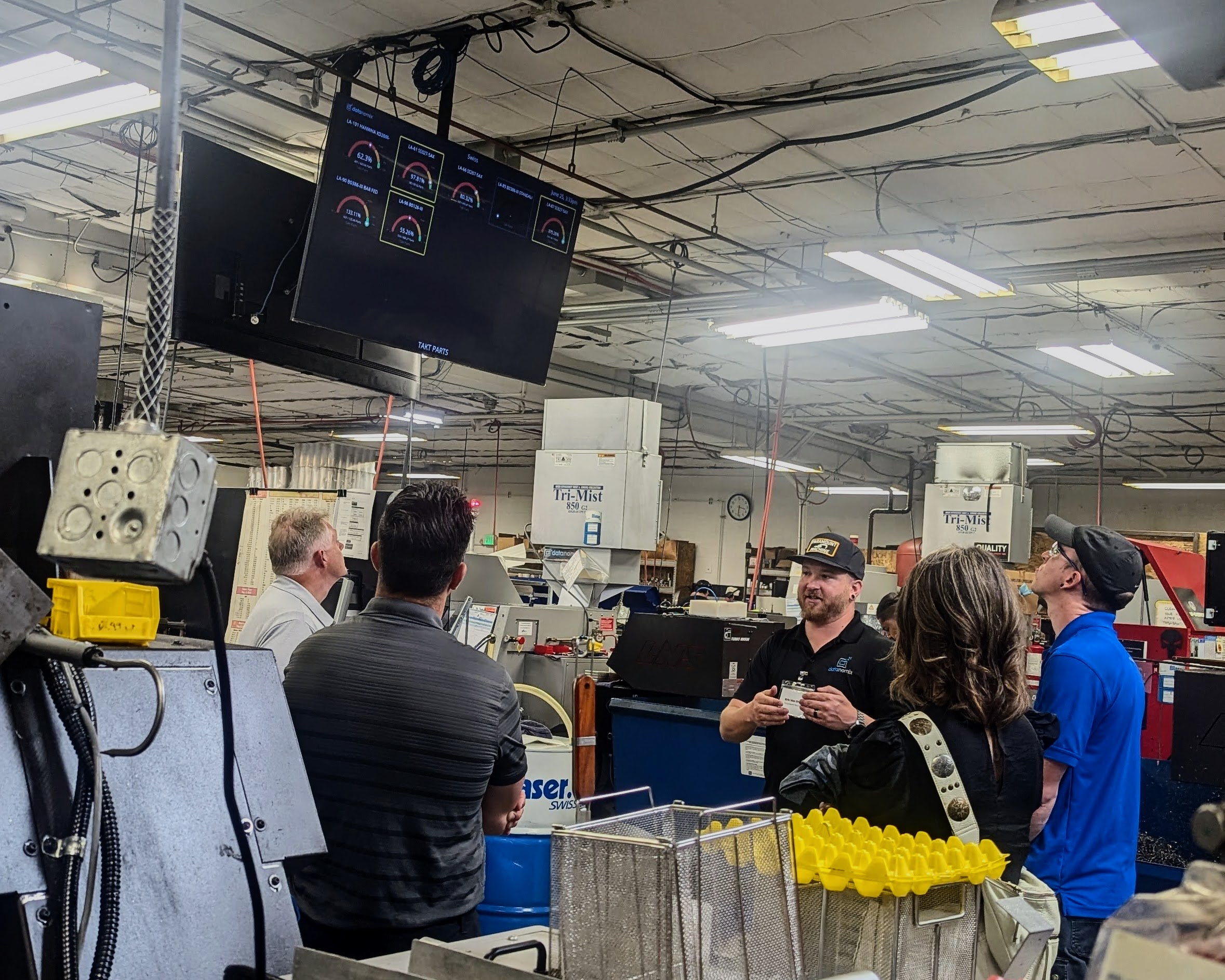
The Salt Lake City leg of The Make More Tour brought us to Paramount Machine, where local manufacturers, partners, and shop leaders showed up ready to talk about what’s working, what’s broken, and what’s next. This wasn’t a passive lunch-and-learn. It was a high-signal conversation on precision machining, workforce development, manufacturing automation, and how production data is helping shops take control.
Here’s what we learned…
Production Data Is Changing the Way Shops Operate
At Paramount, Datanomix isn’t just running in the background. It’s part of the daily decision-making process. From new equipment investments to how employees are trained, shops use production data to validate gut instinct and move faster with fewer surprises.
- Data helps justify big moves.
Plan smarter with actual shop performance before buying new machines or launching new programs. John Rausch, General Manager, and Eric Van Orden, Technical Lead at Paramount Machine, discussed how their teams utilize historical trends from Datanomix to mitigate risk in those conversations. - Accountability and morale are rising together.
A system that shows where people are doing well and where they’re struggling keeps expectations clear, aligned, and conversations constructive. - Production monitoring software is becoming the foundation.
The real value comes when teams start treating insights from systems like Datanomix as part of their performance management, not just measurement.
Automation Is Coming Fast, but Strategy Still Has to Catch Up
We asked attendees to identify the technologies that would shape the next three to five years. Robotics, AI, and connected systems topped the list, but it wasn’t a hype session. The group got honest about the implementation challenges and how shops adapt.
- Most shops don’t have a playbook.
When evaluating automation projects, the usual approach remains reactive, focusing on fixing the squeakiest wheel. However, that’s starting to change, with shops forming internal teams or using Kaizen-style prioritization to choose their next improvement intentionally. - Tool monitoring and MES systems are trending topics.
Manufacturers want solutions that work with their existing production management software and ERP—not another silo. Manufacturers require a technology ecosystem that complements existing processes, rather than competing with them, especially when vendors hinder their ability to deliver. - Shops want visibility outside their four walls.
When parts leave for outside processing, like plating or powder coating, they often disappear into a black hole. If something gets delayed, the customer doesn’t care whose fault it is. They only care that the part isn’t on time. It’s not just about knowing what’s happening on your machines. It’s about having data that follows the entire job, from start to finish.
Workforce Development Is a Real Differentiator
Utah recently lowered the legal age to operate a CNC machine from 18 to 17, providing shops with new opportunities to connect with teenagers who are already considering their future in manufacturing. That opened the door for a broader conversation about talent strategy.
- You don’t need to know manual machining to succeed in today’s shop.
What matters more is curiosity and digital fluency. With tools like G-code programming software, CAD, CAM, and intuitive machine monitoring systems, the new generation of machinists can skip the broom and go straight to the machines. - Shops are seeing strong results from mentorship and early responsibility.
One attendee said the key to engagement is giving young workers real ownership. Not busywork. Not endless training wheels. Real projects, real machines, real expectations. - Diversity is also gaining attention.
With leaders like Jenean Goodsell, Chief People Officer at Paramount, working to bring more women into the industry, there is hope for a more inclusive future. That’s not just an HR stat. It’s a signal that manufacturing is broadening the scope of what talent looks like.
“When I first stepped into the manufacturing world, I didn’t see many people who looked like me, but I also saw an opportunity to change that. Now, as someone who has the opportunity to influence how we grow our team, I feel a genuine responsibility to open doors for more women to thrive here. It’s not just about representation; it’s about building a stronger, more innovative industry for everyone.”
— Jenean Goodsell, Chief People Officer at Paramount
Everyone’s Trying to Make More with Less
Productivity is a given. The question is how to get more done with the people and machines you already have. The conversation around operational KPIs focused heavily on utilization, efficiency, and managing tradeoffs.
- Utilization is the one metric everyone agrees on.
With labor shortages and rising demand, shops are utilizing OEE and continuous improvement software to identify underperforming cells and reallocate resources more efficiently. - The ROI on smart investment is real.
Paramount Machine shared how Datanomix helped validate the case for a new machine. By the time it hit the floor, the team already had a plan for how to keep it running at high efficiency from day one. - Forecasting still matters, but resilience matters more.
When supply chains wobble, there’s no secret weapon. Some shops are working more closely with their suppliers to obtain material forecasts, but the consensus is that flexibility and close communication will always prevail over rigid planning.
Strategy Is Starting to Get More Structure
It’s easy to get buried in day-to-day fire drills. However, the shops that stood out during the roundtable were those that structured long-term planning without slowing down.
- Quick quarterly strategy summits are gaining traction.
These aren’t long-winded retreats. They’re fast reviews that help reset priorities and make space for what matters beyond today’s backlog. - Project committees are helping spread the load.
When evaluating technology, not every machinist needs to be a software expert; however, someone on the team should consider how systems like MES or production monitoring fit into their actual workflows. - Action builds momentum.
Teams that keep moving, test new ideas, and adjust on the fly are seeing more gains than those stuck waiting for perfect conditions.
Final Takeaways
The roundtable at Paramount showed just how valuable these conversations can be, which is why we produce The Make More Tour. People came to share what’s working, talk honestly about what’s not, and pick up ideas they can put to work right away. These conversations aren’t about vendors pitching products. It’s about shops learning from each other, from the floor to the front office.
Smart manufacturing is not just about more tech. It’s about maintaining a mindset that fosters continuous improvement, staying curious, and investing in people and processes that propel the business forward. We’re honored to help make that happen.
Want to join the next conversation? Stay tuned for an event near you. The Make More Tour is just getting started!
Learn More About Paramount Machine
Want to see how Paramount Machine is tackling real manufacturing challenges head-on?
- Listen to their podcast interview with Tony Gunn on the Gunn Show to learn how they cut cycle times by 92% and streamlined operations.
- Watch and learn why they made the switch to Datanomix and what it’s doing for their shop.
- Dive deeper with their Manufacturing Mavericks episode, “Making Things Happen”, for more insights on culture, leadership, and smart manufacturing.
For more updates, behind-the-scenes moments, and what’s next for Paramount Machine, follow them on LinkedIn